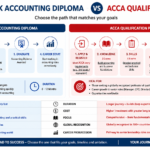

Why Does Choosing the Right Accounting Qualification Matter in Malaysia?
In Malaysia, the title “Accountant” is well-regulated by the Malaysian Institute of Accountants (MIA). To officially use this title, you must be a member of MIA, which requires a recognised accounting qualification, passing specific exams, and completing three years of practical work experience. This combination affects how quickly you earn MIA membership, your employability, and your progression in the field.
Start With a Solid Educational Foundation
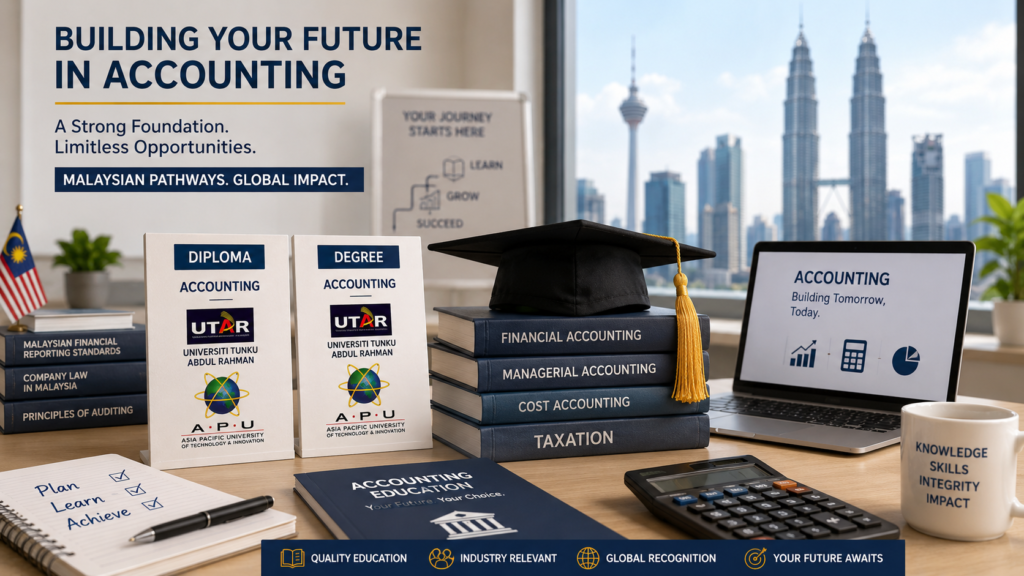
After completing SPM, pursuing a diploma or bachelor’s degree in accounting is the logical next step. Diplomas typically take two to two and a half years and are suitable for those with SPM credits including Mathematics and English. A bachelor’s degree, which takes about three to three and a half years, usually requires STPM or equivalent qualifications and offers a deeper knowledge base and smoother path to MIA membership. Choose a degree from an MIA-recognised university like UTAR or APU to gain exemptions from some professional exams.

Choose the Right Professional Qualification for Your Career Goals
Your degree opens the door, but professional qualifications are key drivers for advanced roles and MIA membership. Options include:
- ACCA: Known for its global recognition and ideal for international careers;
- MICPA: Focusing on Malaysian audit and tax practices suitable for local public practice;
- CPA Australia: Perfect for Asia-Pacific roles and management accounting;
- CIMA: For those interested in strategic finance and corporate budgeting;
- ICAEW (ACA): Representing UK-style audit expertise;
- CFA: Oriented towards investment and finance professionals.
Understand MIA Recognition and Practical Experience Requirements
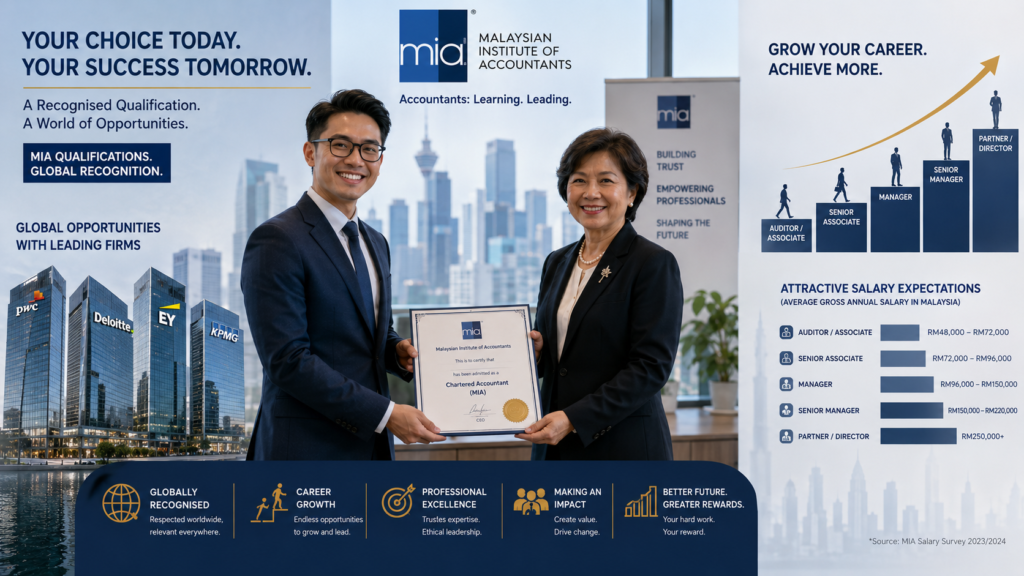
Achieving Chartered Accountant status (C.A. M) involves earning a recognised qualification and completing three years of MIA-approved practical training. Graduates from certain universities like UTAR may bypass some exams, expediting membership. Practical experience is crucial and is usually gained through employment with the Big Four firms or listed companies, where you apply accounting, audit, tax, or finance skills in real-world environments.
How to Make Your Decision
Reflect on your career goals, lifestyle, and budget. For instance, MICPA suits those aiming for local public practice; ACCA or ICAEW benefit candidates targeting the Big Four or international careers; CIMA or CPA Australia are excellent for corporate management accounting; and CFA is best for finance and investment specialists. A recognised degree coupled with relevant work experience may offer the fastest path to MIA membership while balancing cost and time.
The Importance of Structure and Guidance
While self-study is an option, structured programs like those offered by Keen Academy provide valuable guidance aligned with ACCA and MIA pathways. They offer practical training designed for busy adults with flexible learning options, helping you stay on track without sacrificing life’s pleasures.
Salary Expectations and Career Growth
Accountants without professional qualifications typically earn between RM4,000 and RM6,000 monthly. Professionals with ACCA or MICPA qualifications can expect salaries ranging from RM8,000 to RM15,000 and beyond. Graduates of CIMA or CPA Australia aiming for management roles often earn RM10,000 to RM20,000. ICAEW and CFA holders working in global firms can earn RM12,000 or more monthly.
In Conclusion
Accounting is a marathon, not a sprint. Start with a recognised accounting degree, add a professional qualification that suits your aspirations, complete your practical experience, and choose programs that blend structure with flexibility. Planning your path wisely today will ensure a rewarding and successful career tomorrow. Now is the time to embark on your accounting journey with confidence and determination.